
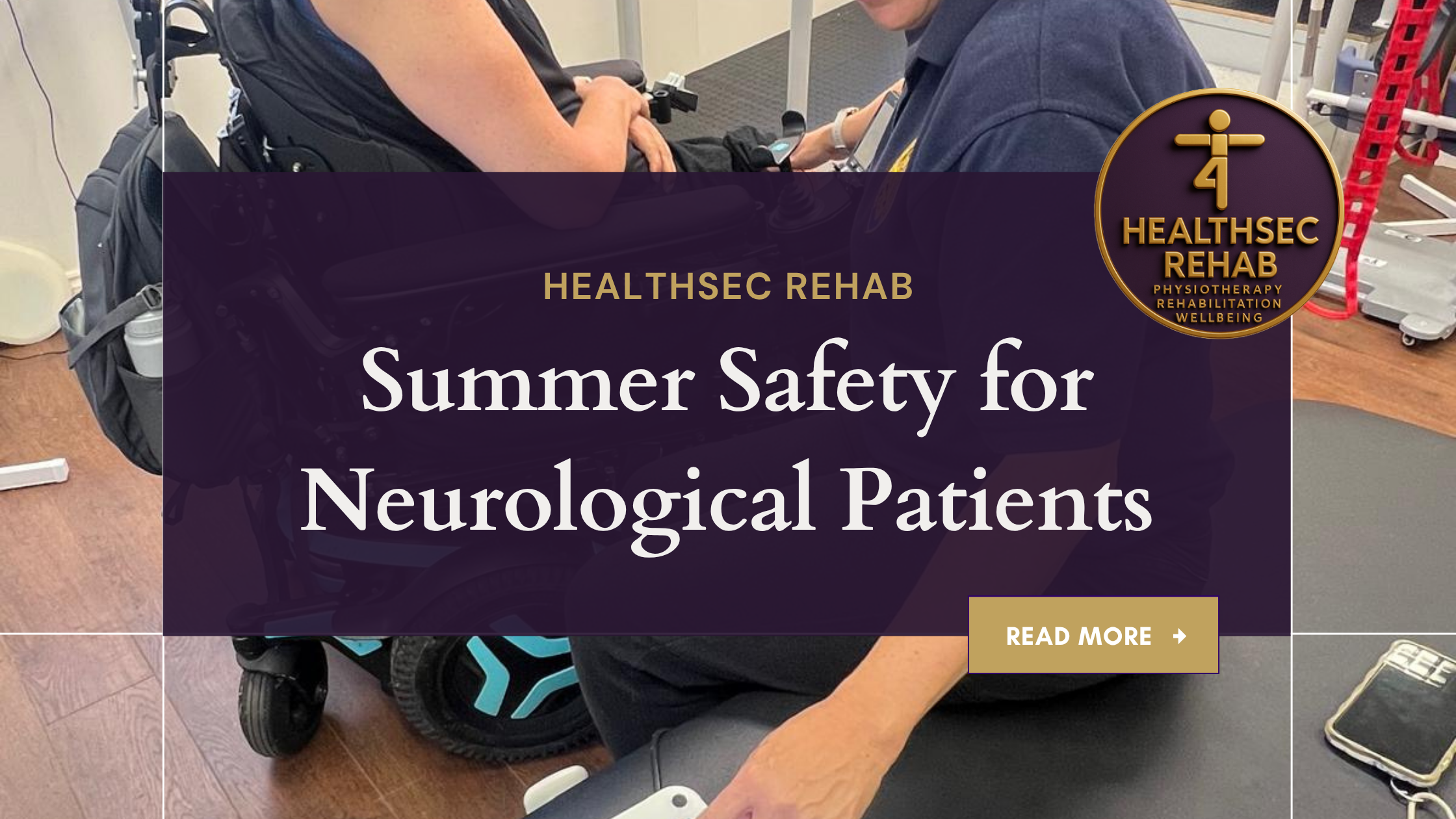
Managing Heat, Fatigue, and Balance in Hot Weather
Does hot weather make your symptoms flare? Feel more fatigued when it’s sunny?
You’re not imagining it.
Why this matters: Heat sensitivity affects people with MS, Parkinson’s, stroke recovery, and elderly adults with balance issues. Summer can turn manageable symptoms into dangerous ones – increased falls risk, severe fatigue, cognitive fog.
What this covers: Evidence-based strategies to stay safe and active during summer months, recognising warning signs, and when to adjust activity levels. Relevant for patients, families, and case managers supporting neuro clients.
Why Heat Affects Neurological Conditions
The Science Behind Heat Sensitivity in Neuro Conditions
Key points:
- Demyelinated nerves (MS, post-stroke) conduct signals slower when body temperature rises
- Heat increases metabolic demand, worsening fatigue in Parkinson’s and post-TBI patients
- Dehydration affects balance and cognition – particularly dangerous for fall-prone individuals
- Medications (anti-spasticity drugs, blood pressure meds) can impair temperature regulation
Clinical insight: Temperature rise of just 0.5°C can temporarily worsen neuro symptoms. This is physiological, not “weakness” – symptoms typically reverse when body cools.
Practical Summer Safety Strategies
8 Ways to Stay Active and Safe in Hot Weather
Key points:
- Timing: Exercise early morning (before 9am) or evening (after 7pm) when temperatures drop
- Cooling aids: Cooling vests, neck wraps, damp towels before/during activity
- Hydration protocol: Small frequent sips (not large volumes that cause bloating)
- Indoor alternatives: Water-based exercise (pool stays cooler), air-conditioned venues
- Pacing: Shorter activity bursts with rest breaks, not continuous exertion
- Symptom monitoring: Stop if vision blurs, balance worsens, or fatigue spikes suddenly
- Clothing: Loose, light-colored, moisture-wicking fabrics
- Environment modification: Fans, shade, access to cool spaces during outdoor events
Practical application: Create a “heat action plan” – know your warning signs, have cooling supplies ready, communicate limits to family/carers.
How Healthsec Rehab Supports Neuro Patients Year-Round
Specialist Neurophysiotherapy in Shrewsbury
HSR services:
- Neuro-specialist physiotherapists trained in heat management strategies for MS, Parkinson’s, stroke recovery
- Home visit options across Shropshire (avoid hot car journeys to clinic)
- Personalised exercise plans adapted for summer months (indoor alternatives, modified intensity)
- Falls prevention assessments that account for seasonal risk factors
- Collaboration with healthcare providers for holistic heat safety
Local accessibility: Based in Shrewsbury with flexible scheduling. Home visits mean treatment in your coolest room, not a hot clinic waiting area.
Heat doesn’t have to end your summer activities
It just requires planning. Recognise your body’s warning signs, use cooling strategies proactively, and adjust (don’t abandon) your routine.
If heat is worsening your neuro symptoms or you’re worried about summer safety, book a specialist assessment. We’ll create a personalised plan that keeps you active safely.
NHS advice Recovering from a Stroke
01743 630138
If heat is worsening your neuro symptoms or you’re worried about summer safety, book a specialist assessment. We’ll create a personalised plan that keeps you active safely.
Comments are closed